What Oxygen Saturation Is Low? Understanding SpO₂ Readings
For many healthy adults at sea level, oxygen saturation is commonly in the mid-to-high 90s, but a single SpO₂ number should never be interpreted without symptoms, baseline health and measurement quality. Persistently low readings, a sudden drop from your usual level or low oxygen associated with breathlessness, confusion, blue/grey coloration, collapse or rapid deterioration needs medical assessment.
What does SpO₂ measure?
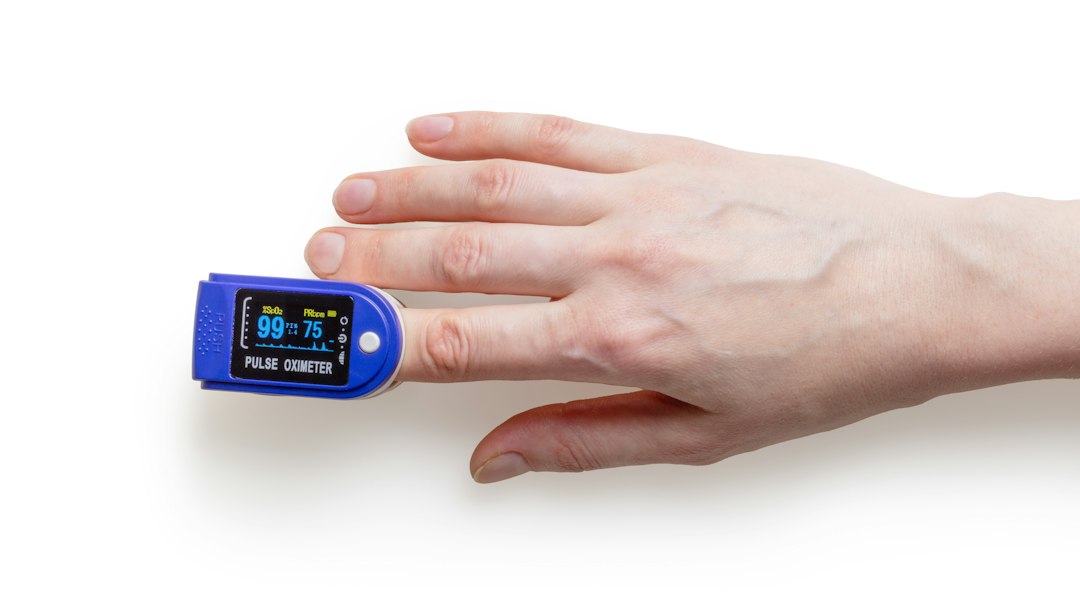
A pulse oximeter estimates the percentage of hemoglobin carrying oxygen in arterial blood. It is useful because it is quick and non-invasive, but it is still an estimate rather than a complete assessment of breathing or circulation.
Is 95% normal?
Many guidance pathways use 95% or higher as reassuring for otherwise healthy adults in the right clinical context. However, normal values vary. Some people with chronic respiratory disease have a lower usual baseline, while others may be seriously ill before the number falls dramatically.
When is an oxygen saturation concerning?
Context matters more than one universal cutoff. NHS England home-monitoring guidance used during COVID-19 advised further clinical assessment for persistent readings around 93–94% and urgent assessment for readings around 92% or lower, while also emphasizing the person’s usual baseline and symptoms. These figures are useful safety references, not a universal diagnosis rule for every condition.
Why can a pulse oximeter be wrong?
Readings may be affected by movement, cold hands, poor circulation, nail products, device quality and how the sensor is positioned. Pulse oximetry also has recognized limitations across different skin pigmentation, so symptoms and trends should not be ignored simply because the displayed number appears acceptable.
What matters more: the number or the trend?
Both matter. A person whose SpO₂ is steadily falling from their normal value may need assessment even before reaching a textbook threshold. Clinicians also look at respiratory rate, work of breathing, mental status, heart rate, skin signs and the overall trajectory.
Seek urgent help if low oxygen is accompanied by
- severe or rapidly worsening shortness of breath;
- inability to speak comfortably because of breathlessness;
- collapse or fainting;
- new confusion or marked drowsiness;
- blue or grey lips/skin;
- chest pain or other signs of serious illness.
How to get a more reliable reading
- rest the hand and keep it warm;
- remove obvious barriers such as heavy nail products when practical;
- wait for a stable pulse signal;
- repeat the reading if it does not match how the person looks;
- compare with the person’s usual baseline when known.
Why SpO₂ can look normal in a sick patient
Pulse oximetry measures oxygen saturation, not ventilation, work of breathing or tissue perfusion. A patient can be tiring, retaining carbon dioxide or developing serious illness while SpO₂ is still relatively preserved. Clinical appearance, respiratory rate, mental status and trajectory matter just as much.
When trends matter more than thresholds
A falling saturation over time can be more informative than one isolated number. Repeated measurements are particularly useful when combined with respiratory rate, heart rate, symptoms and response to treatment. Clinicians should interpret the trend rather than chase a single reading.
Special situations
Chronic lung disease, altitude, pregnancy, poor peripheral circulation and device limitations can all change how a reading should be interpreted. People with individualized target ranges should follow the plan provided by their clinician.
What pulse oximetry actually measures
Pulse oximeters estimate the percentage of hemoglobin carrying oxygen in pulsatile arterial blood. They do not directly measure oxygen delivery to tissues, carbon dioxide, respiratory effort or ventilation. This is why a person can have a normal-looking SpO₂ and still be in significant respiratory distress.
What is a typical oxygen saturation?
Many healthy adults at sea level have saturations in the mid-to-high 90s. However, baseline varies with chronic lung disease, altitude and individual factors. A single universal cutoff should not be used for every person.
Trend and symptoms are more important than one number.
How pulse oximeters can be wrong
Movement, poor circulation, cold fingers, nail products, sensor position and device quality can all affect accuracy. Some devices perform less reliably at very low saturations. If the reading does not fit the clinical picture, repeat the measurement and assess signal quality.
Skin pigmentation and device limitations
Research has shown that pulse oximetry can sometimes overestimate oxygen saturation in people with darker skin, particularly at lower values. This reinforces the need to interpret the number with symptoms and not rely on one device reading when the patient appears unwell.
SpO₂ is not ventilation
A person can retain carbon dioxide while SpO₂ remains normal, especially when receiving supplemental oxygen. Drowsiness, slow breathing, poor chest movement or exhaustion should never be dismissed because saturation looks acceptable.
When low oxygen saturation becomes concerning
Persistently low saturation, especially with breathlessness, chest pain, confusion, cyanosis or rapid deterioration, needs medical assessment. Exact action thresholds depend on the person’s baseline, underlying disease, altitude and clinical setting.
Chronic lung disease and individual targets
Some people with chronic respiratory disease have prescribed oxygen targets that differ from those of healthy adults. Follow the person’s care plan and professional guidance rather than applying a generic target.
Altitude
Oxygen saturation can be lower at altitude because atmospheric oxygen pressure is reduced. A value that is unusual at sea level may be expected at elevation. Symptoms and local guidance still matter.
COVID, pneumonia and respiratory infections
Respiratory infections can reduce oxygenation, but SpO₂ should be interpreted with work of breathing, respiratory rate, chest pain, hydration and mental status. A falling trend is important even if the absolute number has not crossed a familiar threshold.
When the number and patient disagree
If the patient is blue, confused or severely breathless but the device reads 98%, reassess the sensor and the patient. If the person looks well but the device reads 82%, repeat with a warm, still finger and a reliable device while seeking help if the low value persists.
Field scenario: normal saturation, severe breathing effort
A patient with asthma has SpO₂ 96% but is speaking only in short phrases and using accessory muscles. The normal saturation does not make the attack mild. Work of breathing and fatigue may signal serious risk.
Field scenario: low reading with cold hands
An older person has cold fingers and a reading of 86% but appears comfortable. Warming the hand and repeating the measurement gives 94%. The first reading may have been affected by poor peripheral perfusion. The patient still needs assessment in context, but technical error matters.
Common mistakes
- treating SpO₂ as a complete respiratory assessment
- ignoring respiratory rate and work of breathing
- using one cutoff for every patient
- trusting a poor-quality signal
- forgetting altitude and chronic lung disease
- assuming normal SpO₂ excludes serious illness
Key points
- Pulse oximetry estimates oxygen saturation, not ventilation.
- Technical and physiological factors can distort readings.
- Baseline, altitude and chronic lung disease affect interpretation.
- Trend and symptoms matter more than one isolated value.
- Never let a normal reading override obvious respiratory distress.
FAQ
Can a pulse oximeter be inaccurate? Yes. Motion, cold extremities, poor perfusion and device quality can affect the reading.
Should symptoms be ignored if SpO₂ looks normal? No. Severe breathlessness, confusion, cyanosis or collapse still requires urgent assessment.