What Is a Normal Resting Heart Rate? Adult Pulse Explained
A resting heart rate of about 60–100 beats per minute is commonly used as a general adult reference range, but fitness, medications, age and health conditions can shift an individual baseline.
Heart rate should never be interpreted as an isolated number. A pulse of 55 in a trained athlete may be normal, while a new rate of 55 with dizziness or fainting can be clinically important.
What is resting heart rate?
Resting heart rate is the number of heart beats per minute when the body is at rest. It is usually measured after sitting or lying quietly for several minutes.
Why can heart rate be lower than 60?
Fitness, sleep and some medications can lower heart rate. Bradycardia becomes more concerning when it is new or accompanied by dizziness, syncope, chest pain, breathlessness or poor perfusion.
Why can heart rate be above 100?
Exercise, pain, fever, anxiety and dehydration commonly increase heart rate. Persistent tachycardia can also occur with arrhythmias, infection, blood loss or pulmonary embolism.
How should you measure a pulse?
Count the rate, note whether it feels regular or irregular and interpret it alongside breathing, blood pressure and symptoms. Wearable devices can be useful but are not perfect diagnostic tools.
Why trends are useful
A change from a person’s usual rate can matter even when the absolute number remains inside a textbook range. Repeated readings can reveal worsening illness or recovery.
When should you seek medical help?
Seek urgent help if an abnormal heart rate is accompanied by chest pain, fainting, severe shortness of breath, confusion or rapid deterioration.
What determines resting heart rate?
Resting heart rate reflects the balance between the heart’s intrinsic rhythm, autonomic nervous system, fitness, medications, hormones, temperature and illness. A single number cannot describe whether the cardiovascular system is healthy.
Many healthy adults have resting rates between about 60 and 100 beats per minute, but trained athletes may be lower and some people normally sit near the upper end without disease.
How to measure a resting heart rate properly
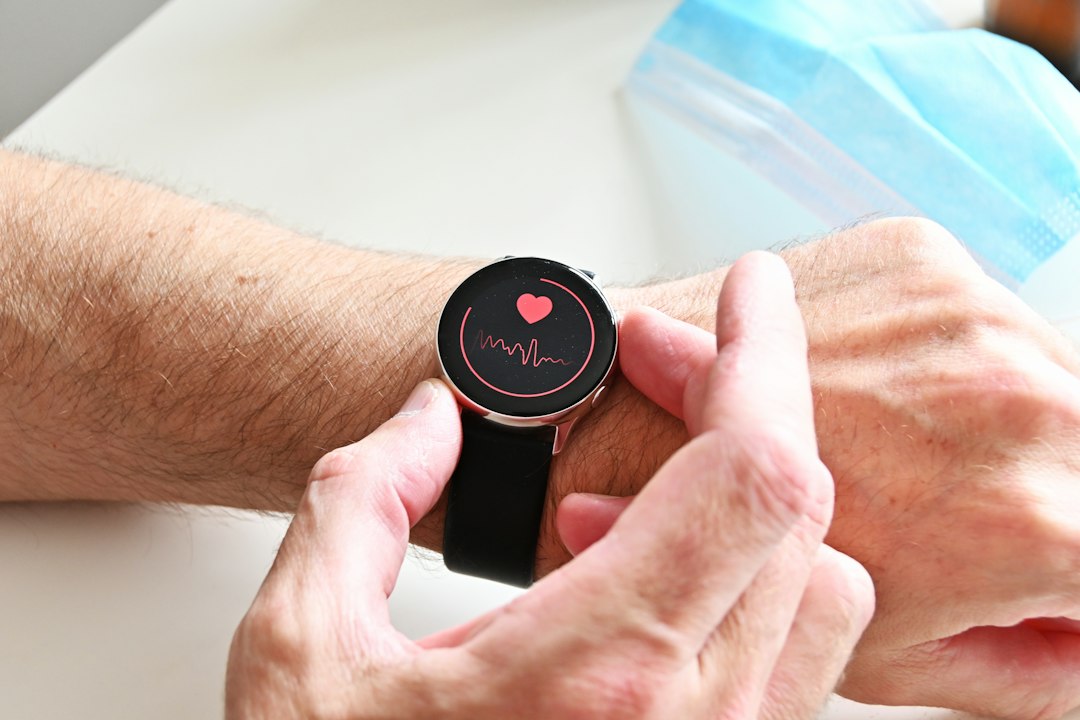
Measure after several minutes of rest rather than immediately after walking, caffeine, smoking or emotional stress. Count the pulse long enough to detect irregularity. Wearable devices can be useful for trends but may produce errors with movement or poor contact.
Resting tachycardia
A persistent resting pulse above the typical range can have many causes: fever, dehydration, anemia, pain, anxiety, hyperthyroidism, medication, stimulant use, arrhythmia or cardiovascular disease. The rate itself does not identify the cause.
Symptoms such as chest pain, fainting, severe breathlessness or marked weakness increase urgency.
Resting bradycardia
A slow resting rate may be normal in athletes or during sleep. It can also occur with medications, conduction disease, hypothyroidism or other conditions. The presence of dizziness, syncope, hypotension or exercise intolerance makes it more concerning.
Rhythm matters as much as rate
A pulse of 80 can still be abnormal if it is very irregular. Palpitations, skipped beats or irregular rhythm can have benign or important causes. If symptoms occur with an irregular pulse, professional assessment may be needed.
Fitness and conditioning
Endurance training can lower resting heart rate because stroke volume increases and autonomic balance changes. This is usually normal if the person feels well. New unexplained bradycardia in someone who is not highly trained deserves a different interpretation.
Fever, dehydration and illness
Heart rate often increases during fever or dehydration. The degree varies. A rapidly rising pulse with falling blood pressure, confusion or poor perfusion can be a warning sign of significant illness.
Caffeine, nicotine and stimulants
Caffeine, nicotine, decongestants and other stimulants can temporarily increase pulse. Recreational drugs can have stronger effects. If palpitations, chest pain or severe symptoms occur, seek medical help.
Medication effects
Beta-blockers and some other cardiovascular drugs lower heart rate. Do not stop prescribed medication because of one reading without medical advice. New symptoms or a major change after medication adjustment should be discussed with a clinician.
Age and heart rate
Children normally have faster rates than adults, so adult reference ranges do not apply. Older adults may have conduction disease or medication effects that change rate and response to illness.
Why trends matter
A resting heart rate that is consistently higher or lower than a person’s usual pattern can be more meaningful than one unusual reading. Wearable devices can help identify trends, but abnormal alerts should be interpreted with symptoms and confirmed when needed.
Field scenario: fast rate after illness
A person recovering from vomiting has a resting pulse of 112 and feels dizzy on standing. Dehydration may be contributing, but the overall assessment should also consider fever, blood pressure and other causes.
Field scenario: slow rate without symptoms
A trained runner has a resting pulse of 48, normal blood pressure and no symptoms. That can be a normal adaptation. The same rate in an older person with fainting would require a different level of concern.
Common mistakes
- treating 60–100 as a rigid definition of health
- ignoring irregular rhythm
- measuring immediately after activity and calling it “resting”
- assuming wearable data is always exact
- ignoring symptoms because the rate is only mildly abnormal
Key points
- Resting heart rate varies with fitness, age, medication and health.
- Rate and rhythm should both be considered.
- Symptoms and change from baseline matter more than one cutoff.
- Wearables are useful for trends but not perfect.
- Persistent unexplained changes deserve medical review.
FAQ
Is a heart rate of 50 always too low? No, especially in some fit adults, but symptoms matter.
Is 100 bpm always too high? Not necessarily. Context such as exercise, fever and stress matters.
What if my pulse is irregular? A new persistent irregular pulse should be discussed with a healthcare professional.
Related ActuMedic guides
Heart rate is one part of cardiovascular assessment
Pulse rate is easy to measure, which can make it tempting to give it more weight than it deserves. Clinicians interpret heart rate alongside blood pressure, respiratory rate, skin signs, mental status, temperature, pain, oxygenation and the patient’s history. A heart rate of 105 may be expected after exertion, but the same rate with chest pain, hypotension and diaphoresis has a very different significance.
For EMS clinicians, the useful question is whether the heart rate is appropriate for the situation and whether it is helping or hindering circulation. Rate, rhythm, pulse quality and trend all contribute to that judgment.
Pulse quality and peripheral perfusion
When clinically appropriate, palpating a pulse provides information beyond the displayed number. A weak or thready peripheral pulse can accompany poor perfusion, while a bounding pulse can occur in other physiological states. These descriptions are subjective and should not replace objective observations, but they can contribute to the overall picture.
Compare the pulse finding with skin temperature, capillary refill where relevant, blood pressure and mental status rather than treating pulse character as a diagnosis.
Why rhythm changes interpretation
A regular pulse and an irregular pulse at the same average rate are not equivalent findings. Irregularity may reflect premature beats, atrial fibrillation or other rhythms, but palpation alone cannot identify the exact rhythm. If ECG monitoring is indicated and available within the clinician’s scope, the electrical rhythm can be assessed more directly.
New irregularity associated with syncope, chest pain, hypotension or severe breathlessness increases concern and should be communicated clearly.
Heart rate as a compensatory response
Tachycardia can be an appropriate physiological response to stress. During dehydration or blood loss, increasing heart rate may help maintain cardiac output. During fever, metabolic demand rises. During pain or anxiety, sympathetic activation can increase pulse. The presence of a plausible trigger does not prove that trigger is the only cause.
A persistently rising rate despite rest or treatment should prompt reassessment for ongoing blood loss, infection, hypoxia, pain, medication effects, arrhythmia or other causes.
When a “normal” heart rate can still be concerning
Medications such as beta-blockers can blunt tachycardia. Older adults and some patients with conduction disease may not mount the expected heart-rate response to illness. A person with shock therefore does not have to be tachycardic.
Similarly, a heart rate within 60–100 does not neutralize concerning findings such as confusion, hypotension, severe breathlessness or signs of bleeding.
Heart rate during respiratory distress
Respiratory distress commonly increases heart rate through sympathetic activation and increased work. If the patient becomes exhausted, severely hypoxic or peri-arrest, the rate may change in less predictable ways. The trajectory of breathing, consciousness and circulation is more important than chasing a target pulse number.
Heart rate in infection and sepsis
Fever and systemic inflammation often increase pulse. A fast rate with rising respiratory rate, altered mental status, hypotension or reduced urine output can be part of a concerning systemic picture. No heart-rate threshold alone diagnoses sepsis.
Repeated vital signs help show whether the patient is stable, responding or deteriorating.
Heart rate after trauma
Pain and fear can cause tachycardia after injury, but blood loss must also be considered. Early compensated shock may present with a fast pulse while blood pressure remains within a seemingly acceptable range. This is why trend, mechanism, bleeding assessment, skin signs and mental status matter.
Heart rate and temperature
Pulse often rises during fever, although the relationship is variable. A rate that seems disproportionate to the degree of fever may encourage clinicians to look for additional causes such as dehydration, pain, medication, arrhythmia or more severe illness.
Heart rate in pregnancy
Pregnancy produces cardiovascular changes and resting pulse can be somewhat higher. Significant tachycardia with chest pain, severe breathlessness, syncope, bleeding or unilateral leg symptoms should not be dismissed as a normal pregnancy change.
Heart rate in children
Pediatric heart rates are age-dependent and generally faster than adult values. Adult cutoffs should not be applied to children. In pediatric assessment, behavior, perfusion, breathing and age-specific ranges all matter.
Reassessment after an intervention
Heart rate can help track response to care when interpreted with other findings. After rest, fluid therapy where authorized, analgesia, fever management or treatment of respiratory distress, a change in pulse may support improvement or deterioration. Document what was done, when it was done and what changed afterward.
A lower rate is not automatically improvement if blood pressure falls or mental status worsens. Physiological variables should make sense together.
What to include in an EMS handover
When heart rate is clinically relevant, report the initial value, trend, rhythm and associated symptoms. Mention interventions and response. “Heart rate fell from 138 to 112 after treatment, blood pressure stable and patient reports less dyspnea” is more informative than listing the final rate alone.
A practical pulse reassessment checklist
- Confirm the rate manually when a monitor value seems inconsistent.
- Assess whether the rhythm feels regular or irregular.
- Interpret the rate with blood pressure, breathing and mental status.
- Review medication and stimulant history when relevant.
- Look for pain, fever, dehydration, bleeding and other physiological drivers.
- Repeat measurements after interventions or clinical change.
- Escalate when symptoms or the overall trend are concerning.
More questions about resting heart rate
Can dehydration raise heart rate? Yes. Reduced circulating volume can trigger a compensatory increase in pulse, particularly with standing or exertion.
Can stress cause a resting pulse above 100? It can, but persistent tachycardia or tachycardia with concerning symptoms should not automatically be attributed to anxiety.
Does a normal pulse exclude shock? No. Medication, age, conduction disease and the stage or type of shock can alter the expected heart-rate response.
Is pulse from a smartwatch accurate enough for emergencies? Wearables can provide useful trends, but motion and signal limitations can cause errors. In an emergency, clinical assessment and validated monitoring take priority.
Documentation: rate, rhythm, symptoms and change
Heart-rate documentation is most useful when it captures clinical meaning rather than a stream of numbers. If the pulse is irregular, unusually weak or associated with symptoms, record that context. When an intervention occurs, document the time and the response in heart rate alongside other vital signs.
A trend such as “HR 104 initially, 126 after standing with dizziness, returned to 108 supine” is more informative than three disconnected pulse values. Accurate trend documentation also helps receiving clinicians distinguish a transient physiological response from persistent deterioration.
Avoid anchoring on anxiety
Tachycardia commonly accompanies anxiety, but anxiety is also common when people are genuinely ill. Before attributing a fast pulse to panic, consider the history, breathing, oxygenation, temperature, hydration, bleeding risk, chest symptoms and medication or substance exposure. Reassess after rest and appropriate care.
The same principle applies to fitness and bradycardia: a slow pulse can be normal in a trained person, but “athletic” should not be used to dismiss new syncope, hypotension or exercise intolerance.
Bottom line for EMS learners
Learn heart rate as a dynamic physiological sign rather than a memorized normal range. The rate tells you how often the heart is beating; the patient assessment tells you whether that rate is appropriate and effective. Rhythm, perfusion, symptoms, medication and trend determine its clinical significance.
For practical prehospital assessment, establish an early baseline, verify unexpected monitor values, repeat observations after interventions and communicate meaningful change. Those habits are more valuable than treating 60 and 100 beats per minute as rigid boundaries between normal and abnormal.
Heart rate: a final practical example
Imagine two adults with a pulse of 112 beats per minute. One has just climbed stairs, is speaking normally and returns toward baseline after several minutes of rest. The other is resting after several hours of vomiting, feels faint when sitting up and has a falling blood pressure. The same heart rate carries different significance because the context, symptoms and trend are different.
A second example is bradycardia. A fit endurance athlete may have a resting pulse in the high 40s without symptoms, whereas a new pulse of 48 in a person with syncope, hypotension or chest discomfort deserves urgent assessment. The rate is a starting point, not the conclusion.
For EMS learners, develop the habit of asking why the rate is what it is and whether it matches the rest of the physiology. Recheck the pulse after movement, treatment or deterioration, and communicate the trend. When symptoms are severe or the patient is unstable, follow local emergency protocols and medical direction rather than relying on numerical cutoffs.
One more point about trend
Repeated heart-rate measurements are most useful when they are taken in comparable conditions. A pulse measured immediately after moving a patient may differ from one measured after several minutes at rest. Note important context so that the receiving team does not mistake a normal physiological response for unexplained deterioration. Conversely, persistent tachycardia at rest deserves attention when it does not fit the apparent situation. Always interpret the pulse with the patient’s symptoms, circulation, breathing and overall trajectory.
Sources
General health information only. Measurements should be interpreted alongside symptoms, baseline health and professional assessment.