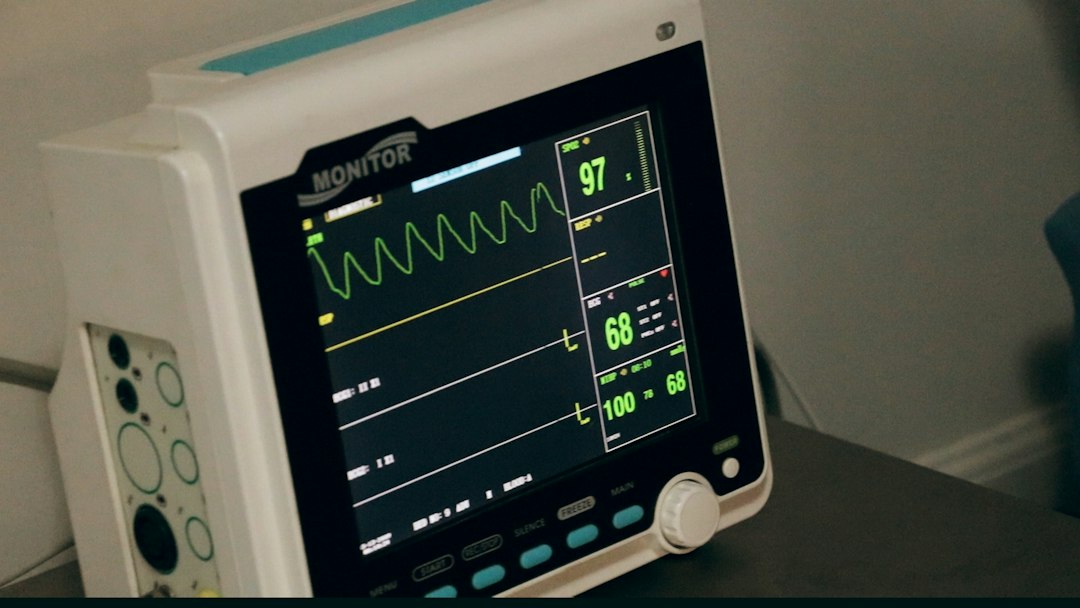
Shock Index (SI) is calculated by dividing heart rate by systolic blood pressure: SI = HR ÷ SBP. It is a simple hemodynamic marker that can help highlight possible circulatory compromise, especially when heart rate and blood pressure viewed separately still look relatively reassuring. It should never replace clinical assessment.
How to calculate Shock Index
Example: heart rate 110 bpm and systolic blood pressure 100 mmHg.
110 ÷ 100 = 1.10
The result is unitless.
What is considered a normal Shock Index?
A commonly cited adult reference range is around 0.5–0.7, although some literature considers values up to about 0.9 acceptable depending on context. Values approaching or exceeding 1 have been associated with worsening hemodynamic status in multiple emergency populations. These are not universal treatment thresholds.
Why can Shock Index be useful?
During compensated shock, systolic blood pressure can remain deceptively normal. A rising heart rate combined with a falling or low-normal systolic pressure may therefore be more informative when expressed as a ratio. Research has explored SI in trauma, hemorrhage, sepsis, pulmonary embolism, myocardial infarction and obstetric emergencies.
Shock Index does not diagnose shock
One of the biggest mistakes is treating SI as a diagnosis. A high value can occur for many reasons, including pain, anxiety, fever, medication effects and physiological stress. A normal value also does not exclude serious illness.
Factors that can distort interpretation
- beta blockers and other medications that alter heart rate;
- pacemakers or dysrhythmias;
- pregnancy;
- age and frailty;
- pediatric physiology;
- athletic baseline bradycardia;
- pain, fever, anxiety or stimulant use.
Use the trend, not just the snapshot
Repeated measurements may be more informative than a single value. A patient whose SI rises while perfusion, mental status or respiratory pattern worsens deserves careful reassessment even if individual vital signs do not yet look extreme.
What should EMS clinicians combine it with?
Shock Index works best as one piece of a larger assessment: general appearance, mental status, skin signs, pulse quality, blood pressure trend, respiratory rate, capillary refill where appropriate, mechanism or likely cause, bleeding, temperature and response to interventions.
Interpreting the number in context
A higher Shock Index can suggest circulatory stress, but the value should be interpreted alongside mental status, skin signs, blood pressure trend, pulse quality, respiratory rate and the likely cause of illness or injury. One abnormal ratio is a prompt for closer assessment, not a diagnosis.
Why trends can be valuable
Serial values can reveal deterioration that is less obvious when heart rate and blood pressure are viewed separately. A rising SI together with worsening perfusion or mental status is more concerning than a stable isolated value in an otherwise well-appearing patient.
Clinical situations where SI is often discussed
- trauma and occult hemorrhage;
- gastrointestinal bleeding;
- sepsis;
- obstetric hemorrhage;
- pulmonary embolism;
- other causes of circulatory compromise.
Limitations
Beta blockers, pacemakers, dysrhythmias, pregnancy, age, pain, fever and athletic bradycardia can all distort interpretation. This is why the ratio should never override the bedside picture or local escalation criteria.
Worked examples
Example 1: HR 90, SBP 120 → SI 0.75.
Example 2: HR 110, SBP 100 → SI 1.10.
The second value is more concerning in the right clinical context, especially if it is rising over time.
Why Shock Index is useful in the field
Shock Index (SI) is calculated by dividing heart rate by systolic blood pressure. Its appeal is simplicity: two routinely collected vital signs become a single ratio that can sometimes reveal physiological stress before obvious hypotension develops. A patient with a heart rate of 120 and systolic pressure of 120 has an SI of 1.0; a patient with a heart rate of 90 and systolic pressure of 120 has an SI of 0.75.
The important point is that SI is not a diagnosis. It is a risk marker that can add context when evaluating possible hemorrhage, sepsis, trauma or other causes of circulatory stress. It should be interpreted alongside mental status, respiratory rate, perfusion, mechanism, symptoms and serial observations.
The physiology behind Shock Index
In early circulatory compromise, the body often attempts to preserve arterial pressure by increasing heart rate and vascular tone. Systolic blood pressure may therefore remain within a familiar range while pulse rises. Because SI combines these two responses, the ratio can become abnormal before traditional hypotension appears.
This is particularly relevant in compensated shock. A young, fit patient may maintain systolic pressure despite significant blood loss. A rising SI may support concern when combined with pallor, anxiety, weak pulses or delayed capillary refill. The ratio does not replace those findings; it simply gives another way to recognize that the relationship between heart rate and pressure is becoming unfavorable.
Measurement quality comes first
Shock Index is only as reliable as the heart-rate and blood-pressure measurements used to calculate it. Movement, vehicle vibration, incorrect cuff size, severe vasoconstriction and dysrhythmias can all distort automated readings. If either value appears inconsistent with the patient, repeat it before interpreting the ratio.
Manual pulse assessment and a confirmatory manual blood pressure can be useful when the monitor produces an implausible result. False precision from a bad measurement is more dangerous than not calculating the index at all.
Shock Index in trauma and hemorrhage
Trauma is one of the best-known uses of SI because compensated hemorrhage can be missed when clinicians focus only on blood pressure. A rising pulse with preserved systolic pressure may be an early clue that compensation is intensifying.
Still, SI cannot identify the source of bleeding and can be altered by pain, anxiety or medications. In major trauma, mechanism, visible hemorrhage, pelvic or abdominal findings, mental status and overall perfusion remain essential. A normal SI does not exclude internal bleeding.
Shock Index in sepsis
In suspected sepsis, tachycardia and falling pressure can produce an elevated SI. This may support concern for deteriorating circulation, but fever, pain and dehydration can also raise the ratio. Sepsis itself is diagnosed and risk-stratified through a much broader clinical assessment.
Serial SI can be useful when the patient’s physiology is changing. If heart rate rises while systolic pressure falls, the index may deteriorate quickly and make the trend easier to appreciate. It should be documented with the underlying vital signs rather than reported in isolation.
Shock Index in pregnancy
Pregnancy changes baseline cardiovascular physiology, including heart rate and blood volume. Obstetric literature has explored modified thresholds because a ratio interpreted in a non-pregnant adult may not carry the same meaning during pregnancy or postpartum hemorrhage.
Prehospital clinicians should follow obstetric protocols and use pregnancy-specific context. Significant bleeding, syncope, abdominal pain, altered mental status or poor perfusion demand urgent assessment regardless of whether a calculated SI crosses a particular threshold.
Age and medication effects
Older adults may have blunted tachycardic responses because of conduction disease, medications such as beta-blockers or reduced physiological reserve. Beta-blockers can make SI appear more reassuring than the clinical picture. Conversely, stimulants, fever, pain and anxiety can raise heart rate and therefore increase SI without shock.
The clinical lesson is broader: derived scores are most useful when the clinician understands what can alter their component variables.
Dysrhythmias and pacing
Atrial fibrillation with rapid ventricular response, supraventricular tachycardia and other dysrhythmias can produce a high SI for reasons different from hemorrhage or distributive shock. Pacemakers or conduction disease may prevent the expected compensatory heart-rate response.
In these settings, the ratio may be less informative. The ECG, patient appearance, perfusion and underlying cause should take priority over a derived number.
Modified Shock Index
Modified Shock Index (MSI) divides heart rate by mean arterial pressure rather than systolic pressure. The idea is to incorporate both systolic and diastolic components of arterial pressure. MSI has been studied in several emergency and critical-care settings, but it is no more a standalone diagnostic tool than conventional SI.
EMS systems should use any derived index only if it adds value and fits local practice. More calculations do not automatically mean better assessment.
Why trends are more useful than one value
A single SI is a snapshot. A sequence can show whether physiology is stabilizing or deteriorating. For example, an SI increasing from 0.7 to 0.9 to 1.1 while mental status worsens and skin becomes cool is more concerning than one isolated reading of 0.9 in a stable anxious patient.
Record the actual heart rate and systolic pressure at each time point. The ratio should never replace the original observations because the receiving team needs to see what is driving the change.
Shock Index versus blood pressure alone
Blood pressure can remain preserved during compensation. SI may reveal that maintaining that pressure requires an increasingly rapid heart rate. That is its main conceptual advantage. However, some patients become hypotensive without tachycardia, so SI can also understate risk.
The best approach is integration: pressure, pulse, respiratory rate, mental status, capillary refill, skin temperature and clinical context should all inform the assessment.
Shock Index versus MAP and perfusion signs
MAP estimates average arterial pressure; SI describes the relationship between pulse and systolic pressure. Peripheral perfusion signs provide yet another dimension. These measures answer different questions and can disagree.
A patient may have a normal MAP but rising SI and worsening capillary refill. Rather than choosing which metric is “correct,” recognize that the combined picture may show compensation under strain.
Field scenario: occult hemorrhage
A patient after a high-energy collision has a heart rate of 112 and systolic pressure of 124, giving an SI around 0.9. Blood pressure alone may look acceptable. The patient is pale, increasingly restless and has abdominal tenderness. Twenty minutes later, heart rate is 126 and systolic pressure is 108, pushing SI above 1.1. The trend supports increasing concern for circulatory compromise.
Field scenario: fever and dehydration
A young adult with gastroenteritis has a heart rate of 118 and systolic pressure of 118, producing an SI of 1.0. They are febrile, anxious and dehydrated but alert with warm skin and improving symptoms after supportive care. The elevated ratio is important, but it does not prove hemorrhagic or septic shock. Context prevents overinterpretation.
Common mistakes
- treating SI at or above 1 as a universal diagnosis of shock
- ignoring medication effects and dysrhythmias
- using an unreliable automated blood pressure in the calculation
- failing to document the actual heart rate and systolic pressure
- assuming a normal SI excludes compensated shock
- using the index without considering age, pregnancy or baseline physiology
Expanded FAQ
Can Shock Index detect bleeding before hypotension? It can sometimes become abnormal during compensated hemorrhage, but it is not sufficiently sensitive or specific to rule bleeding in or out.
Is 0.9 the universal abnormal threshold? No. Thresholds vary by population and study.
Can beta-blockers make SI misleading? Yes. A blunted heart-rate response can make the ratio appear more reassuring than the patient’s perfusion.
Should SI be calculated in every patient? No. Use it when it adds clinical value, especially in patients where circulatory compromise is a concern.
Key points to remember
- Shock Index = heart rate ÷ systolic blood pressure.
- It can support recognition of compensated circulatory stress.
- Trend is more useful than a single isolated value.
- Medication, age, pregnancy, dysrhythmia and measurement quality affect interpretation.
- Never use SI as a substitute for mental status, perfusion and repeated vital signs.
Source
Koch et al. — Shock index in the emergency department: utility and limitations
Why Shock Index is a screening clue, not a diagnosis
Shock Index (SI) is calculated by dividing heart rate in beats per minute by systolic blood pressure in millimetres of mercury. It combines two familiar vital signs into a ratio, but the result is not a direct measurement of circulating blood volume, cardiac output or tissue oxygen delivery. An increased ratio may reflect haemorrhage, infection, dehydration, pain, anxiety or a rapid rhythm. A lower ratio does not reliably exclude serious illness. The useful question is whether SI adds information to a patient assessment that already considers symptoms, examination and repeated observations.
The ratio is dimensionally unusual: it divides a rate by a pressure, and its apparent simplicity can encourage unjustified precision. A change from 0.70 to 0.95 is a prompt to examine the trend and measurement quality, not proof of a particular diagnosis. Clinicians should avoid making treatment or destination decisions from the ratio alone.
Worked calculations and what they cannot tell you
| Heart rate | Systolic BP | Shock Index | Interpretation task |
|---|---|---|---|
| 80 | 120 | 0.67 | Check baseline and clinical presentation. |
| 110 | 110 | 1.00 | Investigate causes of tachycardia and perfusion signs. |
| 90 | 90 | 1.00 | Same ratio, different pulse and pressure pattern. |
These are arithmetic examples, not validated triage categories. Notice that two very different patients can produce the same index. A patient taking a beta-blocker may not mount the expected tachycardia during blood loss; another patient with pain and fever may have an elevated index without haemorrhage. The ratio never substitutes for a careful history and examination.
What research says about predictive accuracy
A 2023 systematic review and meta-analysis of adult trauma studies examined Shock Index for massive transfusion and mortality. The authors found that SI alone had a limited role for predicting massive transfusion and was not accurate for predicting mortality. In other words, an association observed across populations does not mean the ratio is sufficiently reliable to determine an individual patient’s outcome. Study setting, injury severity, inclusion criteria and the cut-off selected all influence apparent performance.
Research also explores Shock Index in sepsis, gastrointestinal bleeding, pregnancy and paediatric trauma. Findings from one population cannot be imported uncritically into another. For example, children’s normal heart rates and blood pressures change substantially with age; adult thresholds are unsuitable for a child. Pregnancy alters cardiovascular physiology, and interpretation must be guided by obstetric context. A clinician reading a research paper should ask: who was studied, what outcome was predicted, how was the ratio measured, and did it improve decisions beyond ordinary assessment?
When the ratio may be falsely reassuring
Medication is an important source of error. Beta-blockers and some rate-controlling medicines may blunt the heart-rate response to physiological stress. Pacemakers can also change the relationship between rate and circulatory compromise. A patient with a severe conduction abnormality may have a relatively slow pulse despite significant illness. In these situations, a low or modest Shock Index must not be used as a reason to dismiss pallor, confusion, weak pulses, prolonged capillary refill or concerning bleeding history.
Another trap is measurement timing. A pulse recorded while a patient is moving and a systolic pressure measured several minutes later do not describe exactly the same moment. Where possible, pair observations from the same assessment, document their timestamps and repeat the pair when the condition changes. If the cuff reading is implausible, improve technique and reassess before trusting the calculated index.
Trend-based interpretation in the field
Consider a patient after a fall with an initial heart rate of 88 and systolic pressure of 124: SI is approximately 0.71. Twenty minutes later, the heart rate is 112 and systolic pressure 106: SI is approximately 1.06. The change is clinically relevant if it accompanies increasing abdominal pain, pallor or reduced responsiveness. Yet it is the combination of observations, not the mathematical threshold, that supports escalation.
Now consider a febrile patient whose pulse falls from 124 to 102 while blood pressure remains stable and symptoms improve. The trend may be reassuring, but it does not prove that serious infection has been excluded. Continue assessing respiratory rate, consciousness, skin perfusion and the overall trajectory. A derived ratio should be interpreted alongside the underlying measurements, not in place of them.
What to record in a structured handover
Communicate the original vital signs, not just the index: “Heart rate 118, systolic pressure 102, SI approximately 1.16, repeat 126 over 94 after ten minutes, with worsening pallor.” Include the reason for concern, timing, mental status, breathing, capillary refill, suspected bleeding or fluid losses, medication history and any authorised interventions with their observed effect. A receiving clinician can recalculate the ratio but cannot reconstruct missing observations.
For international teams, local protocols determine whether and how a calculated index is used in triage, pre-alerts or clinical decision support. It does not create independent authority for a particular fluid, blood product, drug or destination. The clinical assessment and local escalation pathway remain primary.
Frequently overlooked questions
Does a Shock Index of 1 mean a patient is bleeding?
No. It means the numerical heart rate equals the systolic pressure. Many different clinical states can produce that relationship, and bleeding may occur with a lower index.
Can SI be useful when blood pressure is still normal?
Sometimes. A rising heart rate relative to systolic pressure can reveal physiological stress before frank hypotension, but the index is neither sensitive nor specific enough to rule shock in or out.
Should EMS calculate SI in children using adult thresholds?
No. Paediatric physiology and age-adjusted research differ from adult practice. Follow age-appropriate assessment and local paediatric guidance.
What if the pulse is irregular?
Both rate measurement and haemodynamic interpretation become more difficult. Verify the observation using appropriate methods and assess symptoms and perfusion rather than trusting the ratio alone.
Evidence, related guides and clinical takeaway
For the evidence base, see Carsetti et al., Critical Care (2023): systematic review of Shock Index in adult trauma and Diaztagle Fernández et al. (2024): systematic review in septic shock. Both concern defined study populations; neither supplies a universal prehospital treatment rule.
Continue with Mean Arterial Pressure, Capillary Refill Time, Vital Signs Interpretation or the Prehospital Medicine hub.