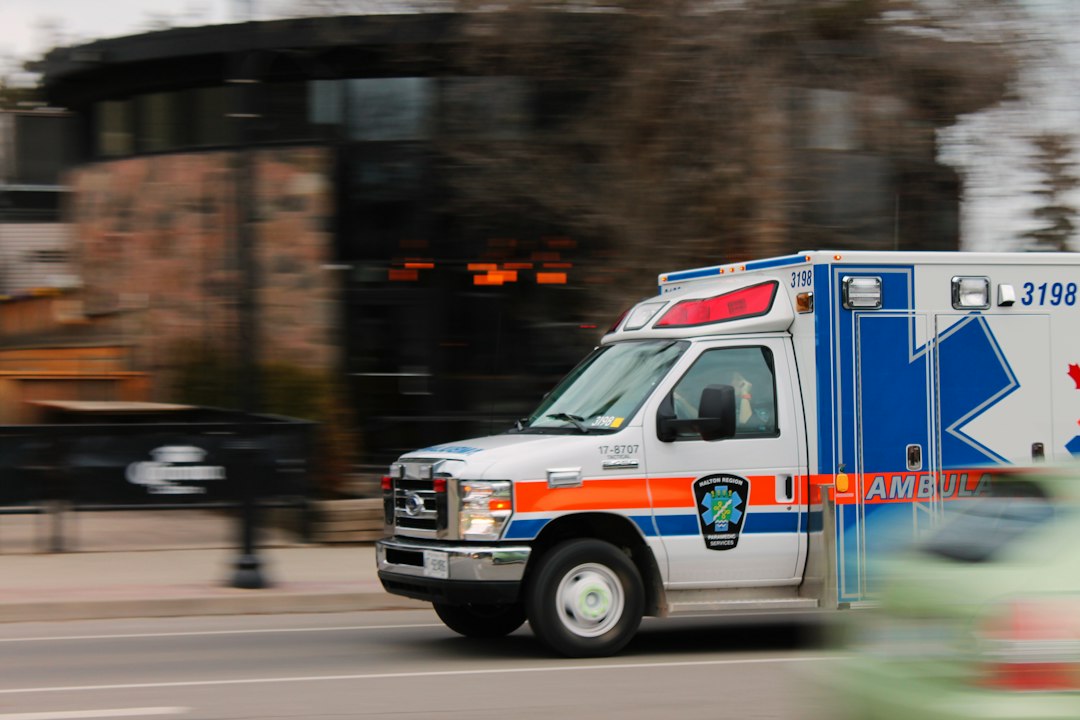
EMTs and paramedics both provide out-of-hospital emergency care, but paramedics generally have more advanced education and a broader clinical scope. In the United States, the National Registry describes EMTs as clinicians with the core knowledge and skills needed to stabilize and safely transport patients, while paramedics provide advanced emergency medical care for critical and emergent patients under medical oversight.
The exact difference is not universal. Scope of practice varies by country, state, province, EMS system and medical director. This article uses U.S. terminology as a reference point and should not be read as a legal scope document for every service.
EMT: the foundation of EMS care
EMTs are trained to recognize life threats, perform a structured assessment, provide basic emergency care, use common ambulance equipment and transport patients safely. They are a central part of EMS response systems and may work in emergency ambulances, fire-based EMS, private ambulance services, event medicine and other out-of-hospital settings.
Typical areas of practice can include airway positioning, oxygen delivery where authorized, bleeding control, splinting, CPR/AED use, basic medical and trauma assessment, vital signs, patient movement and structured handover. Local protocols determine exactly what an EMT may perform.
Paramedic: a more advanced clinical role
Paramedics build on the same assessment and emergency-care foundations but are educated for more complex decision-making and advanced interventions. Depending on jurisdiction, this may include advanced airway management, ECG acquisition and interpretation, vascular access, medication administration, management of dysrhythmias, advanced resuscitation and treatment of critically ill or injured patients.
The National Registry defines the paramedic as an allied health professional whose primary focus is advanced emergency care for critical and emergent patients, functioning within a comprehensive EMS response and under medical oversight.
EMT vs paramedic at a glance
| Area | EMT | Paramedic |
|---|---|---|
| Clinical level | Core emergency care | Advanced emergency care |
| Assessment | Structured primary and secondary assessment | Advanced assessment and clinical reasoning |
| Medications | Limited, protocol-dependent | Broader formulary, protocol-dependent |
| Airway | Basic airway management | May include advanced airway procedures |
| Cardiology | Recognition, AED/monitoring as authorized | Advanced rhythm assessment and treatment where authorized |
Which role is “better”?
Neither role is simply a better version of the other. EMS systems depend on clinicians working within their training, local protocols and team structure. An experienced EMT with excellent assessment, communication and scene management can be extremely valuable. Paramedic education adds advanced clinical depth, but it does not replace strong fundamentals.
What should someone learn first?
Strong EMS practice starts with the same foundations at every level: scene safety, general impression, ABCDE, vital signs, focused history, reassessment, communication and recognizing deterioration. Advanced knowledge becomes useful only when those basics are reliable.
Training pathways and certification
Education pathways differ widely between countries and even between EMS systems. In the United States, EMT education focuses on foundational assessment, stabilization and transport, while paramedic education adds advanced pharmacology, cardiology, airway management, vascular access and more complex clinical decision-making. Certification, licensure and local authorization are separate concepts: completing a course does not automatically authorize every skill in every service.
How the roles differ on scene
On a real call, EMTs and paramedics often work as one clinical team rather than as isolated roles. EMTs may lead scene organization, obtain history and vital signs, provide basic interventions and support transport while paramedics perform advanced assessment or treatments when indicated. The exact division of tasks depends on local protocols, crew configuration and patient acuity.
Common misconceptions
- Paramedic does not simply mean “ambulance driver with more skills.” It is a distinct clinical role.
- EMT does not mean “unskilled.” EMT assessment and early care can be critical to patient outcome.
- Advanced interventions do not replace basic care. Airway positioning, hemorrhage control, CPR and reassessment remain fundamental at every level.
- Job titles cannot be compared perfectly across countries.
Which role is right for you?
If you are choosing a career path, consider how much responsibility, education time, pharmacology and clinical decision-making you want. EMT can be a strong entry point into EMS, while paramedic training is better suited to clinicians who want a broader advanced scope and are comfortable managing higher-acuity patients.
The core difference: depth of education and clinical responsibility
EMTs and paramedics both provide emergency medical care, but paramedic education is generally more extensive and includes a broader range of assessment, pharmacology, cardiology and advanced interventions. The exact difference depends on the jurisdiction.
The distinction is not “basic versus good” or “driver versus clinician.” EMTs are trained clinicians within their scope, and paramedics build on that foundation with additional education and responsibility.
Education pathway
EMT programs typically focus on foundational emergency assessment, airway support, CPR/AED, trauma care and common medical emergencies. Paramedic programs usually require significantly more classroom, laboratory, clinical and field-internship training.
Assessment and clinical reasoning
Both EMTs and paramedics assess patients. Paramedics are generally expected to manage more complex differentials, advanced monitoring and medication decisions. However, strong EMT assessment and early recognition remain essential to patient safety.
Airway management
EMTs commonly use basic airway techniques and devices. Paramedics may have access to additional advanced airway tools depending on local scope. Device availability does not replace the need to recognize respiratory failure and reassess effectiveness.
Medications
EMT medication lists are usually more limited. Paramedics often administer a wider range of medications for cardiac, respiratory, allergic, pain and other emergencies. Exact formularies vary widely.
Cardiac care
Paramedics commonly receive deeper ECG and dysrhythmia education and may perform advanced cardiac interventions. EMTs still play critical roles in CPR, AED use, monitoring and recognition of deterioration.
Trauma care
Both levels manage trauma, bleeding control, immobilization decisions and transport. Advanced scope may add analgesia, airway or other interventions, but team coordination and rapid recognition matter at every level.
Who is in charge?
On mixed-level crews, the paramedic may hold clinical responsibility for advanced decisions, but effective care depends on teamwork. EMT observations, history and reassessment can materially affect decisions.
Salary and career progression
Paramedics generally earn more because training and responsibility are greater, but salary depends heavily on region, employer, overtime and service model. Career progression can include supervision, education, critical-care transport and other specialist roles.
Can an EMT become a paramedic?
Yes. Many paramedics begin as EMTs and later complete advanced education. EMT experience can build scene confidence and patient communication skills, though program requirements vary.
Is paramedic always the highest EMS level?
Not everywhere. Some systems have critical-care, advanced-practice or specialist paramedic roles requiring additional education. Other countries structure prehospital care differently.
International differences
In the US, EMT and paramedic are distinct certification levels. In the UK, paramedic is a regulated profession with a different training pathway. Canada and Australia use additional classifications. Comparisons should always specify country.
Field scenario: chest pain
An EMT crew can perform rapid assessment, vitals, aspirin where authorized, ECG acquisition where available and transport. A paramedic may add advanced ECG interpretation, vascular access and additional medication depending on protocol. The important difference is not simply the number of skills but the depth of decision-making required.
Field scenario: severe asthma
Both EMT and paramedic clinicians recognize respiratory distress and provide care within scope. The paramedic may have more medication and ventilation options. Early recognition and continuous reassessment remain shared responsibilities.
Common misconceptions
- “EMTs only drive.”
- “Paramedics are nurses or doctors.”
- “Every paramedic worldwide has the same scope.”
- “More procedures automatically mean better patient care.”
- “EMT experience is irrelevant once someone becomes a paramedic.”
Key points
- EMTs provide essential emergency assessment and basic care.
- Paramedics receive more advanced education and usually broader scope.
- Exact responsibilities vary by jurisdiction.
- Teamwork matters more than title hierarchy.
- Many paramedics build their careers from EMT foundations.
FAQ
Can an EMT become a paramedic? In many systems, yes. EMT certification is commonly a prerequisite or stepping stone, but admission rules vary.
Who has the greater scope? Usually the paramedic, but local law and medical direction determine the actual scope.
Are both considered EMS clinicians? Yes. Both contribute to out-of-hospital emergency care.
First, understand what the titles actually mean
EMT and paramedic are often described as two rungs on a single career ladder, but that picture fits the United States more closely than many other countries. In the US, Emergency Medical Technician is a defined EMS clinician level, while paramedic represents a more advanced educational and clinical level. In the United Kingdom, Australia and New Zealand, paramedic is also a regulated professional title, but educational pathways and ambulance team structures differ from the US model. In Canada, terminology and registration requirements vary by province. The important comparison is therefore not which title sounds more senior: it is what education, assessment, registration, local authorisation and clinical responsibilities are attached to a role in a specific jurisdiction. A reader planning a career should start with the official regulator for the place where they want to work, not a generic international job description.
The United States: four commonly recognised EMS levels
The US National EMS Scope of Practice Model describes Emergency Medical Responder, Emergency Medical Technician, Advanced EMT and Paramedic. An EMR may provide immediate care while additional resources arrive. EMTs form a major part of ambulance and first-response staffing and are trained to assess patients, recognise life threats and provide interventions within their level and local authorisation. AEMTs add selected advanced competencies. Paramedics undertake broader education and may be authorised to perform more complex assessments and interventions. The National Registry offers certification pathways at these levels, but certification and state licensure are not interchangeable. States and local systems determine the legal scope, supervision and operational requirements. Some services also use additional specialty or critical-care credentials that do not create a universal fifth level. Always verify the current state rules and employer requirements before assuming that a skill is permitted.
Certification, licensure, credentialing and medical direction
These words are often confused. Education means completing an approved learning programme. Certification may demonstrate that an individual has met an examining body’s standards. Licensure or registration is the legal authority to practise under the relevant jurisdiction’s rules. Employer credentialing and medical direction can impose additional requirements before a clinician performs a procedure in a particular service. A person may hold a national certification and still need a state licence, agency approval, current training and competency checks. Conversely, a job title used by an employer may not accurately describe a nationally comparable qualification. This distinction matters for career planning, public trust and patient safety. It also explains why a procedure described in an American training resource must not automatically be copied into a British, Canadian, Australian or New Zealand ambulance setting.
How the education experience differs
EMT education focuses on structured patient assessment, life-threatening problems, safe transport, teamwork, communication, documentation and core interventions. Paramedic education generally requires deeper study of anatomy, physiology, pathophysiology, pharmacology and clinical decision-making, alongside practical and supervised clinical experience. The exact duration and award depend on the country, programme and regulator. Comparing course length alone is misleading: a short course with a narrow scope and a degree-level programme with a different professional framework are not simply interchangeable. Prospective students should inspect the approved curriculum, clinical placement arrangements, assessment standards, programme accreditation, total costs and graduate eligibility for registration. Ask whether the programme qualifies graduates for the intended jurisdiction rather than relying on marketing language such as ‘internationally recognised’.
International comparison: five systems, five regulatory questions
United Kingdom
The title paramedic is protected, and registration with the Health and Care Professions Council is required to use it lawfully. Ambulance services also employ people in other clinical and support roles with different qualifications. A UK ambulance technician is not automatically equivalent to a US EMT, and local job descriptions need to be read carefully. Paramedic education is tied to approved routes and professional standards.
Canada
Paramedicine is regulated provincially. Different provinces use their own regulatory processes and scopes, and Canadian qualifications such as Primary Care Paramedic or Advanced Care Paramedic should not be translated mechanically into US EMT levels. Applicants moving between provinces or arriving from overseas should consult the relevant provincial regulator and the Canadian Organization of Paramedic Regulators.
Australia
Paramedics are registered through the national regulatory scheme, with the Paramedicine Board of Australia and Ahpra involved in registration. The protected professional title and registration standards make a direct ‘EMT equals Australian paramedic’ comparison inappropriate. Ambulance employers may have additional operational credentialing and graduate requirements.
New Zealand
The Paramedic Council regulates the profession and publishes registration and practising requirements. Clinical roles, operational permissions and education pathways should be checked against the current regulator and employer information. A qualification or job title from another country does not automatically confer authority to practise.
What the difference looks like during patient assessment
Consider a patient with chest discomfort and increasing breathlessness. Any appropriately trained responder can contribute by recognising danger, obtaining a history, checking observations, supporting the patient within their authorised scope and arranging prompt escalation. Depending on the system, a paramedic may undertake additional assessment and treatment under protocols or medical direction. But the presence of an advanced clinician does not make basic assessment, communication or reassessment less important. In many emergencies, the quality of the first observations and the speed of recognising deterioration are crucial. A team functions best when each member understands the others’ responsibilities and communicates findings clearly. The aim is not to rank colleagues by title; it is to deliver safe, coordinated care within actual competence and authority.
Scenario: a complex patient with limited information
An ambulance crew meets an older patient who is confused, breathing quickly and unable to give a clear history. One clinician obtains observations and looks for immediate threats while another speaks with family and gathers medication information. The team reassesses and shares changes with the receiving service. A more advanced clinician may have access to additional assessments or interventions, depending on the jurisdiction. Yet neither job title guarantees that a specific procedure is indicated, authorised or available. The educational lesson is that scope defines possible actions, while clinical judgement, teamwork and protocols determine appropriate actions. Documentation should record what was observed, what was done and the response, rather than implying a diagnosis from a single sign.
Career choice: match the role to the work you want to do
Someone who wants to enter prehospital care quickly may find an EMT route attractive in a jurisdiction where it is a recognised entry point. Someone interested in broader clinical responsibility, complex assessment and long-term professional development may prefer a paramedic pathway. However, financial costs, placement demands, shift work, physical requirements and local employment opportunities all matter. Speak with programme staff and working clinicians about typical shifts, supervision, continuing education and the actual scope in the area. Ask about career pathways into education, clinical leadership, community paramedicine, dispatch, critical care or quality improvement. These pathways vary greatly and should not be treated as guaranteed promotions. An informed decision considers patient-facing responsibilities and working conditions, not only the most advanced skill mentioned in a course brochure.
Continuing competence and professional wellbeing
Training does not end when someone qualifies. EMS clinicians must keep skills current, learn from cases, participate in continuing professional development and follow evolving clinical guidance. Recertification, revalidation and registration renewal differ by regulator. A safe workplace also requires fatigue management, manual-handling practices, infection prevention, psychological support and a culture where colleagues can raise concerns without embarrassment. New clinicians should seek supervision and feedback rather than feel pressured to perform beyond competence. Experienced clinicians should avoid assuming that years in service replace formal updating. In both EMT and paramedic roles, reflective practice and communication are essential components of professional reliability.
How to check a training programme before paying
Confirm the regulator or licensing authority in the country, state or province where you intend to work. Ask the provider for the exact qualification awarded and whether the programme is approved for that jurisdiction. Verify eligibility for examinations and registration directly with the relevant body. Request the full fee schedule, including equipment, placement travel, immunisations, insurance, examination charges and potential repeat assessments. Check how clinical placements are arranged and how students are supervised. Look for transparent completion and employment information rather than relying on promises of immediate jobs or international mobility. If you already hold an overseas qualification, seek an official credential assessment before enrolling in unnecessary training. This process can prevent expensive misunderstandings.
Frequently asked career questions
Is a paramedic always the person driving the ambulance?
No. Driving and clinical roles depend on staffing, employer policy, local law and the situation. Both EMTs and paramedics may perform varied duties.
Can a US EMT work as a paramedic in the UK?
Not automatically. The UK has its own registration and qualification requirements. Applicants must check the HCPC and relevant employers.
Does a national certification allow practice in every US state?
No. State licensure and local authorisation remain essential, even when a national certification is recognised.
Is the higher-level role always the right first step?
Not necessarily. Educational readiness, finances, local pathways and personal goals should guide the choice. Both roles require judgement and professional accountability.
Official references: EMS.gov; National Registry FAQ; UK paramedic registration; Canadian paramedic regulators; Ahpra; New Zealand Paramedic Council. Related Actuambu EMS guides: EMS certification levels, how to become a paramedic, scope of practice, ambulance crew roles and the EMS & Paramedic hub.