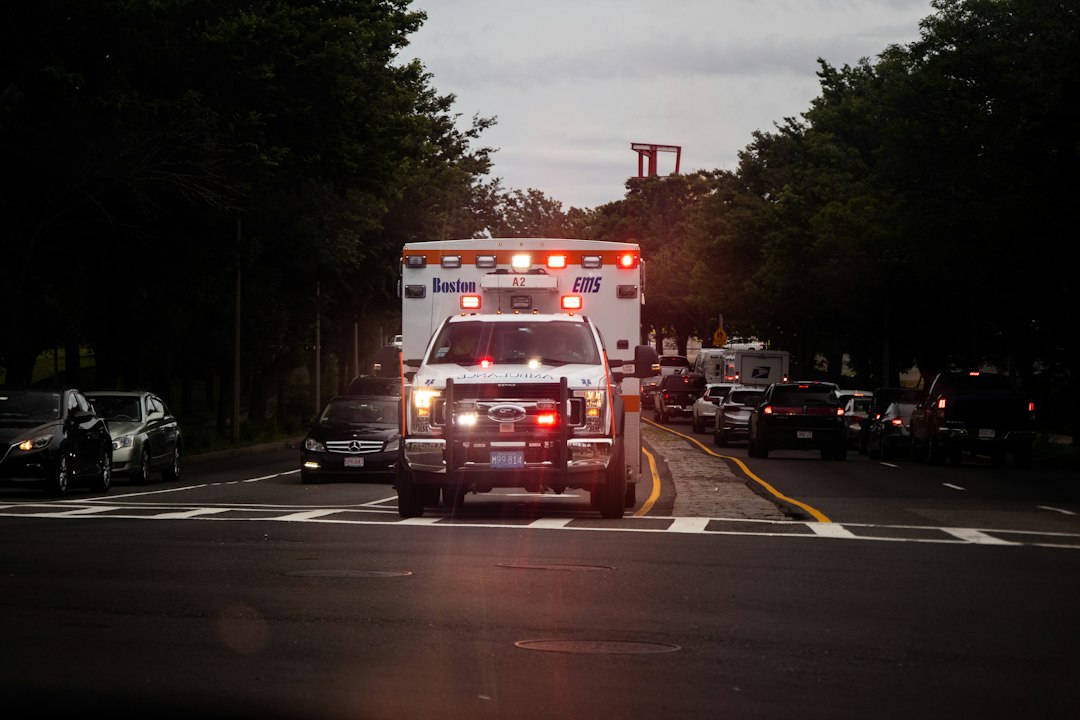
EMS Patient Handover: How to Give a Clear and Useful Report
A strong EMS handover is brief, prioritized and clinically meaningful: who the patient is, what happened, what you found, what changed, what you did and how the patient responded.
Handover is a patient-safety task, not just a documentation ritual. The receiving team needs the information that changes urgency, differential diagnosis and immediate management.
Start with the headline
Open with age, major complaint or mechanism, current acuity and the single most important concern. This gives the receiving team a frame for everything that follows.
Give the relevant history
Use a structure such as SAMPLE or a focused history, but include only information relevant to the current problem. Anticoagulants matter in trauma; inhalers matter in respiratory distress; recent surgery may matter in suspected pulmonary embolism.
Report trends, not just numbers
A blood pressure of 105 mmHg means something different if it started at 150 and is falling. Include repeated observations when they show deterioration or response to treatment.
Describe interventions and response
State what was done, when, and what changed afterwards. The response to treatment is often as valuable as the intervention itself.
Finish with unresolved concerns
Close by naming what still worries you: persistent hypotension, worsening mental status, recurrent pain, airway risk or a time-critical pathway.
Common mistakes
- reading the entire chart in chronological order
- listing normal vital signs without highlighting trends
- forgetting medication doses or treatment response
- failing to state the main concern clearly
Why handover is a clinical intervention
Patient handover is not administrative closure; it is the transfer of clinical responsibility and situational awareness. Important information can be lost when reports are unstructured, overly long or focused on irrelevant detail.
A strong handover helps the receiving team understand three things quickly: why the patient is here, how sick they are and what changed before arrival.
Start with the headline
Begin with age, main problem and acuity. “Seventy-two-year-old with sudden aphasia and right-sided weakness, last known well 45 minutes ago” is more useful than beginning with a long medication history.
The first sentence should orient the listener before details follow.
Chronology matters
Explain what happened in order: onset, deterioration, EMS findings, treatment and response. This makes causal relationships clearer. If the patient changed significantly, highlight that trend.
Use structured frameworks intelligently
Systems may use ATMIST, MIST, IMIST-AMBO, SBAR or other frameworks. The framework is a memory aid, not a script. Use the local standard but keep the report clinically meaningful.
Do not force every possible detail into a framework if it obscures the priority problem.
What to include in a medical handover
Include the chief complaint, onset, relevant history, key examination findings, vital-sign trends, ECG or glucose where relevant, treatments and response. Mention high-risk medications, allergies and baseline function when they affect interpretation.
What to include in trauma
Mechanism, injuries found, blood loss, neurological status, vital-sign trend, hemorrhage control, immobilization decisions and treatments are central. Anticoagulation and time course often matter.
Trend is more useful than one final set of vitals
“BP 108/70” tells less than “BP fell from 142 systolic to 108 while heart rate rose from 92 to 118.” The trend demonstrates deterioration.
Medication handover
Give drug, dose, route, time and response when relevant. Exact timing is particularly important for medications with repeat intervals or when the receiving team needs to know whether further treatment is due.
What not to include
Avoid irrelevant life history, speculation presented as fact and repeated information that does not change care. Handover should be concise but not superficial.
Separate facts from interpretation
Say what you observed and then state your concern. “New confusion, RR 30, BP falling, likely urinary infection; concern for sepsis” is better than presenting “sepsis” as a confirmed diagnosis.
Closed-loop transfer
Make sure the receiving clinician is ready before beginning. At the end, invite questions and clarify responsibility. If there is a critical detail—such as severe allergy or anticoagulation—confirm that it was heard.
Handover during interruptions
Emergency departments are noisy. If the report is interrupted, restart from the key point rather than assuming all information was retained. Written or electronic records complement but do not replace verbal transfer.
Human factors
Fatigue, hierarchy, noise and time pressure all increase error risk. A consistent structure reduces dependence on memory. Speaking clearly and avoiding jargon that may not be shared across systems improves safety.
Field scenario: stroke
A strong report might be: “68-year-old, sudden left facial droop and arm weakness at 14:10, last known well 14:05, glucose normal, BP 178/96, no anticoagulant identified, symptoms persistent.” That gives the receiving team what they need immediately.
Field scenario: sepsis
“82-year-old with two days urinary symptoms, now newly confused; RR rose 24 to 32, systolic BP fell 124 to 94, temperature 38.1, fluids given per protocol with partial pressure improvement.” The trend shows severity better than the label alone.
Common handover failures
- starting with irrelevant detail
- giving only the final vital signs
- forgetting medication times
- presenting a suspected diagnosis as certain
- omitting baseline mental or functional status
- failing to mention response to treatment
Documentation after handover
The written record should support the verbal report with exact observations, times and interventions. If an important event occurred during transport, document it even if it was verbally handed over.
Key points
- Lead with the patient, problem and acuity.
- Tell the story chronologically.
- Report trends, not only final numbers.
- Give exact treatment times when relevant.
- Separate observed facts from diagnostic suspicion.
- Finish with questions and clear transfer of responsibility.
FAQ
Is there one universal handover format? No. MIST, ATMIST, IMIST-AMBO and SBAR are examples; local systems choose different frameworks.
Should every detail be spoken? No. Detailed documentation still matters, but verbal handover should prioritize information that affects immediate care.
What if the patient changes during handover? Stop the report and communicate the change immediately.
Related ActuMedic guides
Sources
EMS scopes, certification rules and protocols vary by jurisdiction. This article is educational and does not replace local regulation, medical direction or service protocols.