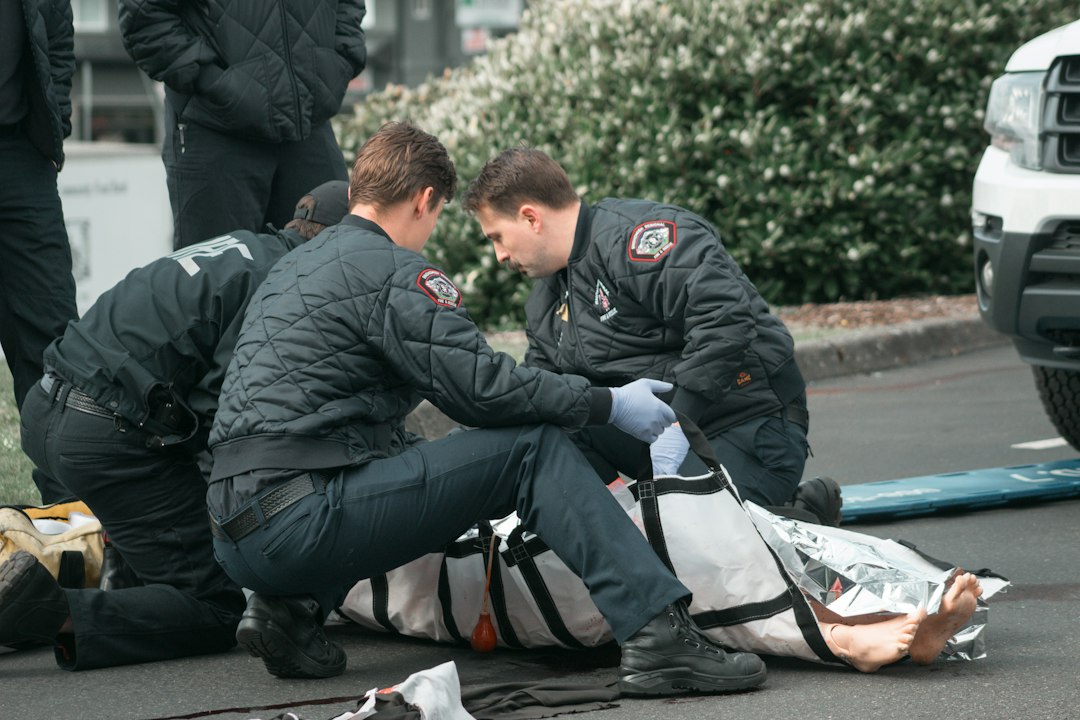
Primary vs Secondary Survey: EMS Assessment Explained
The primary survey identifies and treats immediate life threats; the secondary survey gathers a more complete history, examination and set of findings once immediate threats are being managed.
Confusing the two can delay care. A detailed history is valuable, but not while an airway is obstructed, breathing is failing or catastrophic bleeding is uncontrolled.
What belongs in the primary survey?
ABCDE is a common structure: Airway, Breathing, Circulation, Disability and Exposure. In major trauma, catastrophic hemorrhage may be addressed before or alongside airway depending on the protocol.
What belongs in the secondary survey?
The secondary survey may include SAMPLE, OPQRST, head-to-toe examination, focused system examination, repeated vital signs and review of medications or records.
When do you move on?
You move from primary to secondary assessment when immediate life threats have been identified and addressed as far as possible. Unstable patients may require repeated primary surveys.
Why reassessment bridges both phases
Assessment is not linear. After oxygen, airway positioning, hemorrhage control, medication, movement or deterioration, return to the relevant ABCDE step.
Medical versus trauma patients
The structure is flexible. A medical patient may need a focused secondary exam; trauma may need a systematic head-to-toe survey. The priority remains identifying what can kill the patient first.
Common mistakes
- taking a full history before treating an airway problem
- assuming one normal set of vitals ends the primary survey
- failing to repeat the primary survey after movement
- performing a complete head-to-toe exam when a focused assessment is more appropriate
Why the distinction matters
The difference between primary and secondary survey is not simply “quick exam versus detailed exam.” It is a difference in purpose. The primary survey asks: what can kill this patient now, and what must be addressed immediately? The secondary survey asks: what additional information will clarify the problem, reveal hidden injury or illness, and improve treatment, transport and handover?
When those purposes are confused, clinicians can spend valuable time collecting history while a life threat remains unresolved, or they can stop after a rapid primary assessment and miss important secondary findings.
The primary survey is a cycle, not a doorway
ABCDE is commonly used to structure the primary survey, but the sequence is dynamic. If you identify a life threat at B, intervene and reassess B before moving on. If the patient deteriorates while you are at D, return to A. The goal is not to “finish” the primary survey; it is to keep the most dangerous problem at the top of the priority list.
Scene safety, catastrophic hemorrhage and the need for immediate resources may modify the exact sequence according to local protocol. The underlying principle remains prioritization of threats that are rapidly reversible or immediately fatal.
Airway during the primary survey
Assess whether the patient can maintain and protect the airway. Speech can provide rapid information: a patient who speaks clearly has airflow, but that does not guarantee the airway will remain safe. Listen for stridor, gurgling, snoring or silence. Look for facial trauma, swelling, vomit, blood or foreign material.
After any airway intervention, reassess immediately. Improvement must be demonstrated, not assumed.
Breathing during the primary survey
Assess respiratory rate, effort, chest movement, air entry where appropriate, oxygen saturation and signs of fatigue. The purpose is to recognize failure, not to complete a full respiratory examination. Severe bronchospasm, pneumothorax, pulmonary edema and hypoventilation require prompt recognition and action within scope.
A detailed history of the patient’s asthma can wait if they are barely moving air.
Circulation during the primary survey
Look for catastrophic bleeding, pulse abnormalities, poor perfusion and hemodynamic instability. Blood pressure is useful but may lag behind deterioration. Skin signs, mental status and pulse quality can reveal circulatory compromise before profound hypotension appears.
In trauma, hemorrhage control can take priority alongside airway assessment depending on the system’s protocol. In medical cases, circulatory instability may stem from arrhythmia, sepsis, anaphylaxis, cardiogenic shock or many other causes.
Disability and immediate neurological threats
Rapid neurological assessment may include AVPU or GCS, pupils, glucose and obvious focal deficits. The aim is to identify a dangerous change in consciousness or neurological function, not to complete a full neurological examination.
Hypoglycemia, hypoxia, stroke, seizure, intoxication and head injury can all affect mental status. Correct immediately reversible causes within scope while continuing the assessment.
Exposure and environment
Expose enough to identify serious injury, rash, bleeding or environmental clues, while preserving dignity and preventing heat loss. The scene itself can be diagnostic: medication packets, heaters, chemicals, drug paraphernalia, damaged vehicles or empty alcohol containers may provide context.
When the secondary survey begins
The secondary survey begins when immediate life threats are being controlled and the patient is stable enough for more detailed assessment. It may include SAMPLE, OPQRST, a focused physical examination, a head-to-toe trauma exam, medication review, records, family history, repeated vitals and targeted tests.
The exact depth depends on acuity and transport time. An unstable patient may have only an abbreviated secondary survey because ongoing resuscitation and transport take priority.
Focused versus head-to-toe secondary assessment
Not every patient needs the same secondary exam. A stable patient with isolated ankle trauma may require a focused musculoskeletal assessment rather than a complete medical review. A high-energy trauma patient may require a systematic head-to-toe examination. A patient with abdominal pain needs a different focused examination from a patient with syncope.
Structure should improve care, not create unnecessary ritual.
History belongs in the secondary survey—but timing is flexible
SAMPLE and OPQRST are often taught as secondary-survey tools, but real practice is flexible. While one team member manages airway or circulation, another may obtain essential history from family. The important rule is that history gathering must not delay treatment of an immediate threat.
Some history is itself urgent. Anticoagulant use after head trauma, time last known well in stroke, allergen exposure in anaphylaxis or pregnancy status in abdominal pain can immediately change priorities.
Reassessment connects the two surveys
The patient can move backward in the sequence at any time. After medication, movement, extrication, analgesia, oxygen, fluids or a change in symptoms, repeat the relevant primary-survey elements. A secondary survey does not mean the primary survey is “finished forever.”
This is especially important during transport, when deterioration can be subtle and the environment encourages task fixation.
Medical patient example
A patient with chest pain is pale and diaphoretic. The primary survey identifies a patent airway, increased respiratory rate and borderline blood pressure. Immediate monitoring, ECG and protocol-directed care take priority. Once the patient is stabilized, OPQRST, SAMPLE and a focused cardiovascular examination add detail.
Trauma example
A motorcyclist has severe leg bleeding and altered mental status. Catastrophic hemorrhage control and ABC priorities come before asking about allergies or last meal. Once immediate threats are being addressed, the secondary survey searches systematically for additional injuries that may have been masked by the obvious leg trauma.
Pediatric example
In a child, the primary survey emphasizes appearance, work of breathing and circulation because children can compensate before rapidly decompensating. The secondary survey may rely heavily on caregiver history, age-appropriate behavior and a focused examination.
Common sequencing errors
- taking a complete history while a life threat remains untreated
- performing a detailed head-to-toe exam on an unstable patient before transport priorities are addressed
- failing to return to the primary survey after an intervention
- assuming “normal vital signs” mean the primary survey is complete
- collecting irrelevant secondary details that do not change care
- forgetting hidden injuries because one dramatic injury dominates attention
Handover should reflect both surveys
A clear handover separates immediate threats and what was done from the additional findings that explain the case. Start with the chief problem and primary-survey abnormalities, then give the important history, focused examination, trends and response to treatment.
This mirrors how receiving clinicians think and helps them understand both severity and context.
Key points
- The primary survey finds and treats immediate threats.
- The secondary survey builds a more complete clinical picture.
- Assessment is cyclical, not linear.
- History and examination depth should match acuity.
- Reassessment after intervention is mandatory for meaningful evaluation.
- Structure should improve prioritization, not slow down urgent care.
FAQ
Is SAMPLE part of the primary survey? Usually no; it is generally part of the history once immediate threats are addressed.
Can the secondary survey be skipped? In some time-critical situations it may be abbreviated, but relevant information should still be gathered when possible.
Does primary survey mean only trauma? No. ABCDE applies broadly to medical emergencies too.
Related ActuMedic guides
Sources
Educational content for EMS learners. Follow local protocols, scope of practice and medical direction.