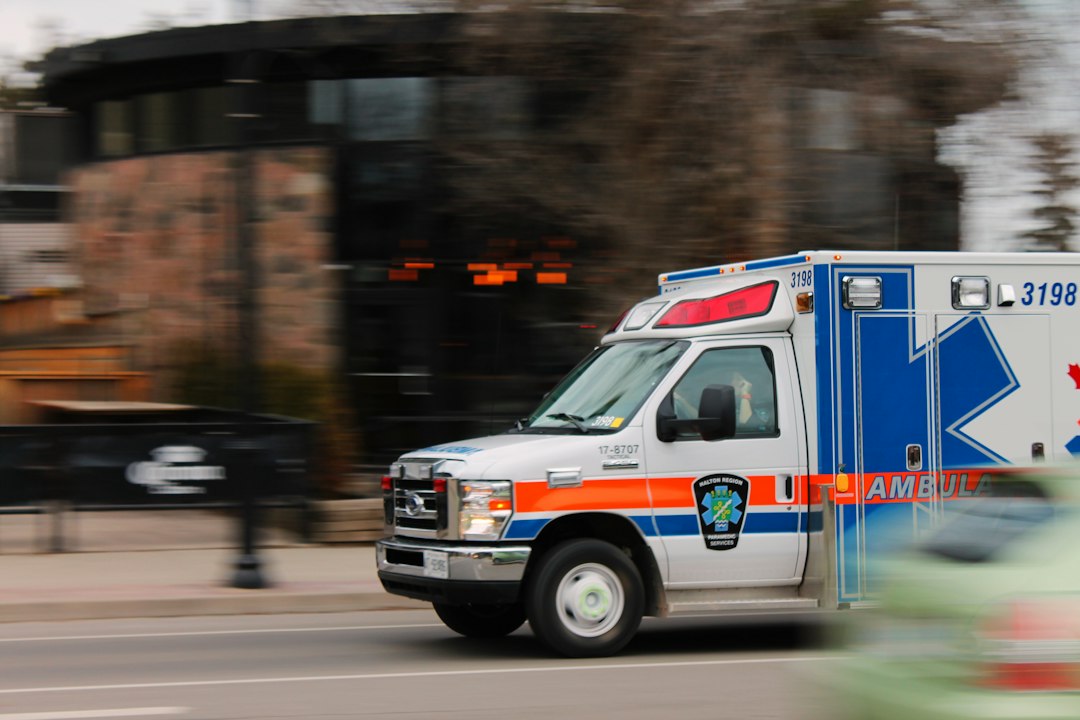
EMT vs Paramedic: What’s the Difference?
EMTs and paramedics both provide out-of-hospital emergency care, but paramedics generally have more advanced education and a broader clinical scope. In the United States, the National Registry describes EMTs as clinicians with the core knowledge and skills needed to stabilize and safely transport patients, while paramedics provide advanced emergency medical care for critical and emergent patients under medical oversight.
The exact difference is not universal. Scope of practice varies by country, state, province, EMS system and medical director. This article uses U.S. terminology as a reference point and should not be read as a legal scope document for every service.
EMT: the foundation of EMS care
EMTs are trained to recognize life threats, perform a structured assessment, provide basic emergency care, use common ambulance equipment and transport patients safely. They are a central part of EMS response systems and may work in emergency ambulances, fire-based EMS, private ambulance services, event medicine and other out-of-hospital settings.
Typical areas of practice can include airway positioning, oxygen delivery where authorized, bleeding control, splinting, CPR/AED use, basic medical and trauma assessment, vital signs, patient movement and structured handover. Local protocols determine exactly what an EMT may perform.
Paramedic: a more advanced clinical role
Paramedics build on the same assessment and emergency-care foundations but are educated for more complex decision-making and advanced interventions. Depending on jurisdiction, this may include advanced airway management, ECG acquisition and interpretation, vascular access, medication administration, management of dysrhythmias, advanced resuscitation and treatment of critically ill or injured patients.
The National Registry defines the paramedic as an allied health professional whose primary focus is advanced emergency care for critical and emergent patients, functioning within a comprehensive EMS response and under medical oversight.
EMT vs paramedic at a glance
| Area | EMT | Paramedic |
|---|---|---|
| Clinical level | Core emergency care | Advanced emergency care |
| Assessment | Structured primary and secondary assessment | Advanced assessment and clinical reasoning |
| Medications | Limited, protocol-dependent | Broader formulary, protocol-dependent |
| Airway | Basic airway management | May include advanced airway procedures |
| Cardiology | Recognition, AED/monitoring as authorized | Advanced rhythm assessment and treatment where authorized |
Which role is “better”?
Neither role is simply a better version of the other. EMS systems depend on clinicians working within their training, local protocols and team structure. An experienced EMT with excellent assessment, communication and scene management can be extremely valuable. Paramedic education adds advanced clinical depth, but it does not replace strong fundamentals.
What should someone learn first?
Strong EMS practice starts with the same foundations at every level: scene safety, general impression, ABCDE, vital signs, focused history, reassessment, communication and recognizing deterioration. Advanced knowledge becomes useful only when those basics are reliable.
Training pathways and certification
Education pathways differ widely between countries and even between EMS systems. In the United States, EMT education focuses on foundational assessment, stabilization and transport, while paramedic education adds advanced pharmacology, cardiology, airway management, vascular access and more complex clinical decision-making. Certification, licensure and local authorization are separate concepts: completing a course does not automatically authorize every skill in every service.
How the roles differ on scene
On a real call, EMTs and paramedics often work as one clinical team rather than as isolated roles. EMTs may lead scene organization, obtain history and vital signs, provide basic interventions and support transport while paramedics perform advanced assessment or treatments when indicated. The exact division of tasks depends on local protocols, crew configuration and patient acuity.
Common misconceptions
- Paramedic does not simply mean “ambulance driver with more skills.” It is a distinct clinical role.
- EMT does not mean “unskilled.” EMT assessment and early care can be critical to patient outcome.
- Advanced interventions do not replace basic care. Airway positioning, hemorrhage control, CPR and reassessment remain fundamental at every level.
- Job titles cannot be compared perfectly across countries.
Which role is right for you?
If you are choosing a career path, consider how much responsibility, education time, pharmacology and clinical decision-making you want. EMT can be a strong entry point into EMS, while paramedic training is better suited to clinicians who want a broader advanced scope and are comfortable managing higher-acuity patients.
The core difference: depth of education and clinical responsibility
EMTs and paramedics both provide emergency medical care, but paramedic education is generally more extensive and includes a broader range of assessment, pharmacology, cardiology and advanced interventions. The exact difference depends on the jurisdiction.
The distinction is not “basic versus good” or “driver versus clinician.” EMTs are trained clinicians within their scope, and paramedics build on that foundation with additional education and responsibility.
Education pathway
EMT programs typically focus on foundational emergency assessment, airway support, CPR/AED, trauma care and common medical emergencies. Paramedic programs usually require significantly more classroom, laboratory, clinical and field-internship training.
Assessment and clinical reasoning
Both EMTs and paramedics assess patients. Paramedics are generally expected to manage more complex differentials, advanced monitoring and medication decisions. However, strong EMT assessment and early recognition remain essential to patient safety.
Airway management
EMTs commonly use basic airway techniques and devices. Paramedics may have access to additional advanced airway tools depending on local scope. Device availability does not replace the need to recognize respiratory failure and reassess effectiveness.
Medications
EMT medication lists are usually more limited. Paramedics often administer a wider range of medications for cardiac, respiratory, allergic, pain and other emergencies. Exact formularies vary widely.
Cardiac care
Paramedics commonly receive deeper ECG and dysrhythmia education and may perform advanced cardiac interventions. EMTs still play critical roles in CPR, AED use, monitoring and recognition of deterioration.
Trauma care
Both levels manage trauma, bleeding control, immobilization decisions and transport. Advanced scope may add analgesia, airway or other interventions, but team coordination and rapid recognition matter at every level.
Who is in charge?
On mixed-level crews, the paramedic may hold clinical responsibility for advanced decisions, but effective care depends on teamwork. EMT observations, history and reassessment can materially affect decisions.
Salary and career progression
Paramedics generally earn more because training and responsibility are greater, but salary depends heavily on region, employer, overtime and service model. Career progression can include supervision, education, critical-care transport and other specialist roles.
Can an EMT become a paramedic?
Yes. Many paramedics begin as EMTs and later complete advanced education. EMT experience can build scene confidence and patient communication skills, though program requirements vary.
Is paramedic always the highest EMS level?
Not everywhere. Some systems have critical-care, advanced-practice or specialist paramedic roles requiring additional education. Other countries structure prehospital care differently.
International differences
In the US, EMT and paramedic are distinct certification levels. In the UK, paramedic is a regulated profession with a different training pathway. Canada and Australia use additional classifications. Comparisons should always specify country.
Field scenario: chest pain
An EMT crew can perform rapid assessment, vitals, aspirin where authorized, ECG acquisition where available and transport. A paramedic may add advanced ECG interpretation, vascular access and additional medication depending on protocol. The important difference is not simply the number of skills but the depth of decision-making required.
Field scenario: severe asthma
Both EMT and paramedic clinicians recognize respiratory distress and provide care within scope. The paramedic may have more medication and ventilation options. Early recognition and continuous reassessment remain shared responsibilities.
Common misconceptions
- “EMTs only drive.”
- “Paramedics are nurses or doctors.”
- “Every paramedic worldwide has the same scope.”
- “More procedures automatically mean better patient care.”
- “EMT experience is irrelevant once someone becomes a paramedic.”
Key points
- EMTs provide essential emergency assessment and basic care.
- Paramedics receive more advanced education and usually broader scope.
- Exact responsibilities vary by jurisdiction.
- Teamwork matters more than title hierarchy.
- Many paramedics build their careers from EMT foundations.
FAQ
Can an EMT become a paramedic? In many systems, yes. EMT certification is commonly a prerequisite or stepping stone, but admission rules vary.
Who has the greater scope? Usually the paramedic, but local law and medical direction determine the actual scope.
Are both considered EMS clinicians? Yes. Both contribute to out-of-hospital emergency care.